getting sick on holiday in Croatia: 112, 194 and your EHIC
Who to call in an emergency, where the European Health Insurance Card works, and what to know if you are coming from outside the EU.
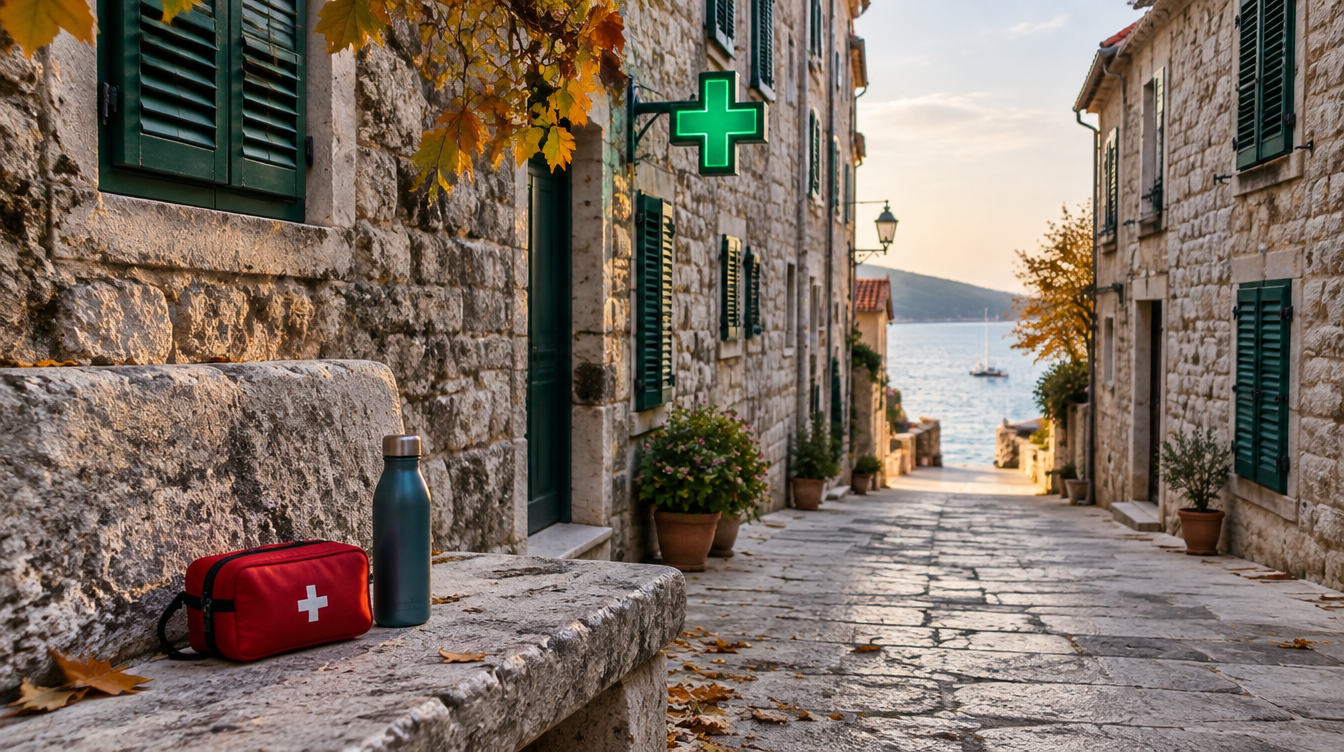
An ear infection in a child, a twisted ankle on a trail, a fever in the middle of the night. Nobody plans for it, but when it happens, most time is lost working out where to go. Here is what to know before you travel to Croatia.
emergencies: 112 or 194
For situations where a life is at risk or health is seriously threatened, call 194, the emergency medical service. The official guidance on gov.hr gives examples such as sudden difficulty breathing, loss of consciousness, sudden chest pain or poisoning. The line works 24/7 from landlines and mobiles. The guidance is simple: if in doubt, call 194.
You can also call 112, the single European emergency number. They will put you through to the emergency medical service, and the same number covers other emergencies too.
When you call, give your name, phone number and address, say what happened and describe the person''s condition. If you do not know the exact address, describe the location using landmarks (a junction, a bridge, a beach, a church). Stay on the line until the dispatcher tells you to hang up, and stay with the person until the team arrives.
Other useful numbers: 193 for the fire service, 195 for search and rescue at sea. If you plan to hike, for example on the Premužić Trail, save these numbers in your phone before you set off.
the european health insurance card
If you are insured in an EU country, Iceland, Liechtenstein, Norway, Switzerland or the UK, your European Health Insurance Card (EHIC; in Croatian *europska kartica zdravstvenog osiguranja*, EKZO) entitles you to necessary healthcare on the same terms as people insured with HZZO, the Croatian Health Insurance Fund.
Where you go matters. The card works with doctors and facilities that have a contract with HZZO. You can see a private doctor, but you pay the full cost yourself. Some services carry a co-payment, the same one locals pay. Check current amounts on the European Commission page on using the EHIC in Croatia. If you do pay for something, HZZO will not reimburse you; claim it from your own insurer back home.
The card is not a substitute for travel insurance and does not cover planned treatment. If you need dialysis, oxygen therapy or chemotherapy, book a date with a provider before you arrive.
coming from outside the eu
Without an EHIC, you will generally pay according to the facility''s price list or rely on your travel insurance. Croatia applies social security agreements with Bosnia and Herzegovina, North Macedonia, Serbia, Montenegro, Turkey and Albania. If you are insured in one of these countries, ask your insurer before the trip which document you need. If you enter on a non-EU passport, also read what to expect at the border with the EES.
what to do before you travel
- Check that your EHIC has not expired and pack it (or travel insurance if you are coming from outside the EU).
- Save 112 and 194 in your contacts.
- Bring any regular medication and a list of the names.
- When you arrive, ask your host where the nearest health centre (*dom zdravlja*) and pharmacy (*ljekarna*) are. Your host will ask for your ID anyway for guest registration, so it is a good moment to ask.
- In summer, many places run seasonal tourist clinics (*turistička ambulanta*). Outside the season, check opening hours with the local tourist board or health centre.
Planning an autumn day out in nature? Our guide to the Premužić Trail is a good place to start.