poljički soparnik: Croatia's chard pie and where to try it
Thin dough, Swiss chard, onion, olive oil and garlic. What makes this EU-protected Dalmatian dish special and how to find the real one in Poljica.
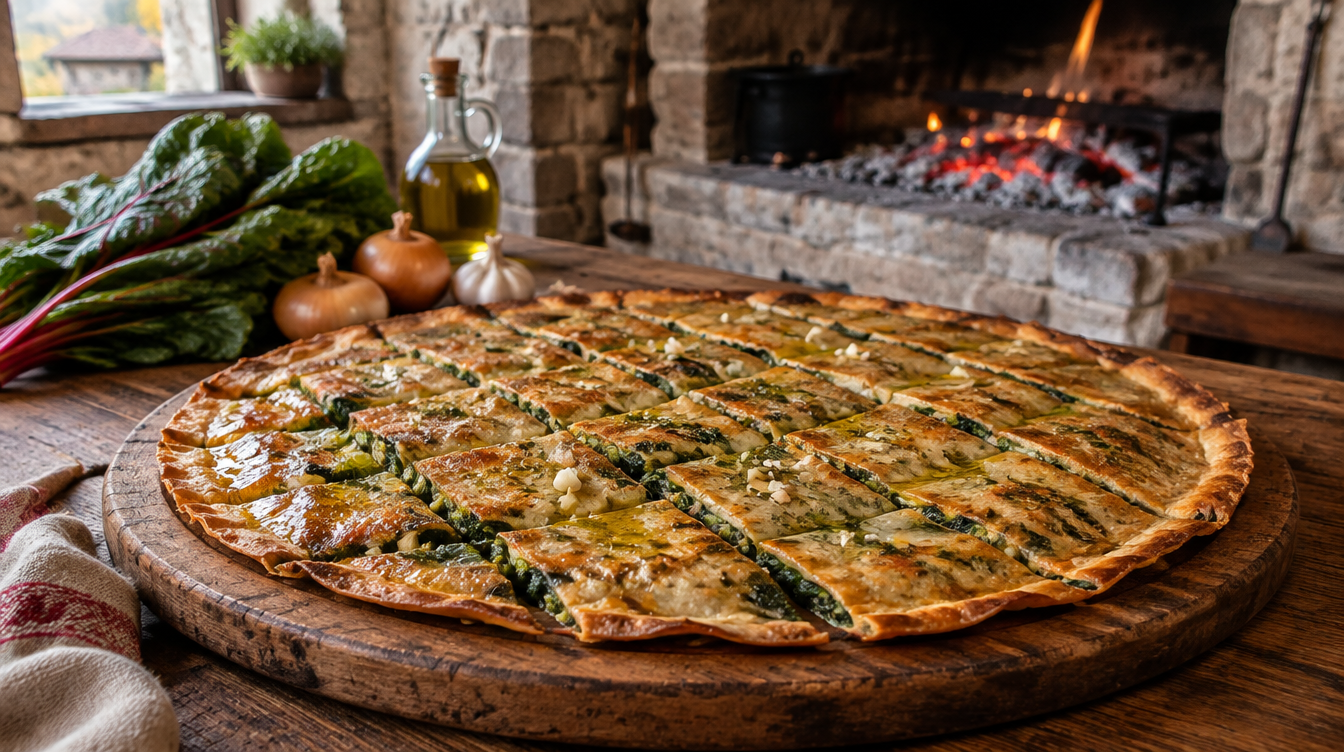
Soparnik looks a bit like a pie and a bit like a flatbread, but locals will tell you it is neither. Thin dough, a filling of Swiss chard and onion, olive oil and chopped garlic on top. It comes from Poljica, the area between Split and Omiš, and it is one of the few Croatian dishes whose name is protected at EU level. If you are staying anywhere around Split or Omiš, it is worth tracking down.
what soparnik actually is
The name the EU protected in 2016 is Poljički soparnik (soparnik from Poljica), along with two local names, *Poljički zeljanik* and *Poljički uljenjak*. According to the description published with the registration, it is made from soft wheat flour, Swiss chard, onion, olive and sunflower oil, garlic, salt and water. No cheese, no meat.
The Croatian National Tourist Board describes it as round and large, usually 90 to 110 centimetres across. The exact size depends on the *sinija*, a round wooden board the dough is laid out on. Traditionally it is baked on an open hearth called a *komin*, covered with ash. Once baked, it is brushed with olive oil, sprinkled with garlic and cut into diamond-shaped pieces.
where it comes from
Poljica was once a small self-governing territory, the Republic of Poljica. The area is bounded by the Cetina river to the northeast, the Žrnovnica river to the west and the sea to the south, and it is divided into Lower, Middle and Upper Poljica, with 21 villages in total. Soparnik has been made here since the time of Ottoman raids. It started as a fasting dish for the poor and is now a delicacy that no celebration in this part of Dalmatia goes without.
A protected geographical indication (PGI) means the product's quality or reputation is tied to its area and at least part of production takes place there. The Omiš Tourist Board also notes that soparnik is on Croatia's official list of intangible cultural heritage.
where to try it
On its gastronomy page, the Omiš Tourist Board publishes a list of certified soparnik producers. Most are family farms (OPG, *obiteljsko poljoprivredno gospodarstvo*) in Gata, Dolac Gornji, Trnbusi, Zvečanje, Žrnovnica, Dugi Rat, Podstrana and Split, with addresses and phone numbers. That is the most reliable way to get soparnik from Poljica itself.
Tips:
- On menus or in shops, look for the exact name Poljički soparnik. Only products made to the official specification may use it.
- Before you go, check the list of certified producers on the Omiš Tourist Board website and call ahead to arrange when and where to pick it up.
- If you buy it packaged, look for the protected geographical indication label.
- Most producers on the list are in Poljica, in the hills behind Split and Omiš, so it fits easily into a day trip to Omiš.
If you enjoy food traditions, see our guides to St Martin's Day and the blessing of the new wine, white truffle season in Istria and autumn in Zagorje.
Looking for a place to stay near Split? Read the story of Villa Sol&Mar in Kaštel Štafilić.